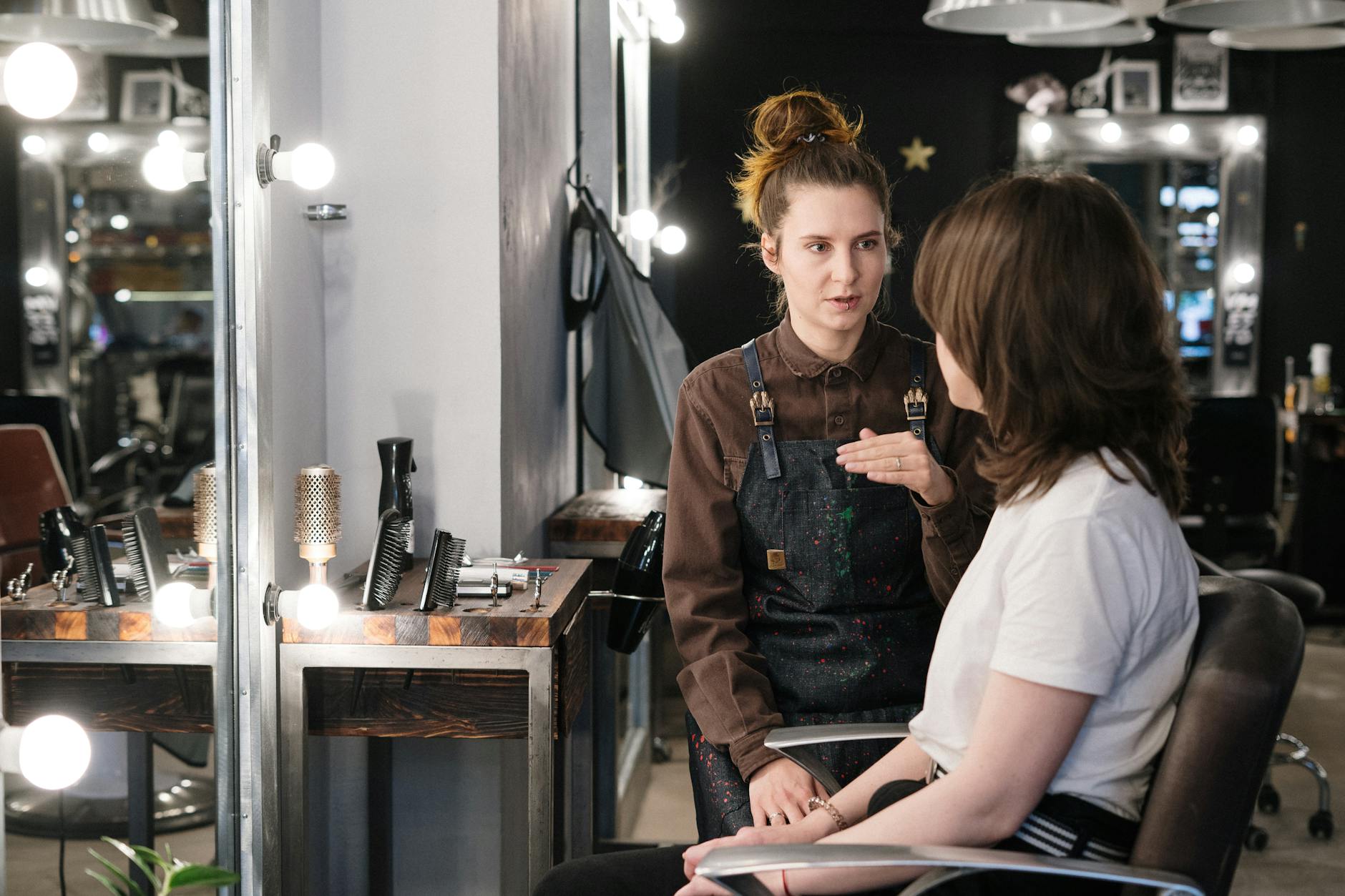
Nobody tells their hairdresser they didn't love the cut.
The relationship is too close for that. You've been in the chair for an hour. The stylist did the work. Saying "actually I'm not that happy with this" as they hold up the mirror is genuinely awkward, so most people smile, pay, and leave. Some come back. Some don't, and you won't know which until the booking calendar tells you.
Salons and barbershops are in a difficult position when it comes to honest feedback. The service is personal. The stylist often knows the client. The moment when feedback would be most useful, right after the cut, is exactly when clients are least willing to give it face-to-face.
The Google review that eventually arrives, if one does, tends to be at one extreme or the other. The visit that was genuinely exceptional, or the one that went badly wrong. Everything in between stays private.
Asking at the right distance
The solution isn't to ask better questions at the mirror. It's to put some distance between the client and the feedback.
A short form sent by text after the appointment removes the awkwardness. The stylist isn't standing there waiting for a response. The client doesn't have to manage the interaction while it's still happening. They can mention something was slightly off without it feeling like a confrontation.
One question with a rating usually does it. "How did today's appointment feel?" with a 1-5 scale and an optional comment box. Open enough to catch whatever the client noticed, short enough that most will actually answer.
Timing matters. Send it the same day, a couple of hours after the appointment, while the experience is still fresh. By the next morning the window is already narrowing. A few days later and most clients probably won't engage unless something genuinely went wrong.
What to ask about
The most useful feedback in a salon isn't usually about the stylist directly. It's about the experience around the cut: whether the appointment ran to time, whether the consultation was thorough enough for the client to get what they actually wanted, whether the price matched their expectation.
These are questions clients can answer honestly because they're not evaluating a person they have a relationship with. "Did the consultation give you a clear sense of what you'd be getting?" is answerable without feeling like a complaint. "Was there anything about the appointment that surprised you?" tends to surface the things clients noticed but didn't say at the time.
Pricing surprises are worth asking about separately, especially if your prices have changed recently or vary between stylists. An unexpected number at checkout is a reason people don't rebook, and they almost never say that's why.
Repeat clients
Regular clients present a different version of the same problem. Someone who's been coming monthly for two years has a real relationship with their stylist. The feedback threshold gets higher as the relationship deepens; saying something critical starts to feel like it could damage something.
For long-term clients, ask less often and keep the question open. "Is there anything about your visits you'd like to change?" once or twice a year reads like a genuine check-in rather than a form to fill in. New clients need the opposite: a short check-in after the first visit catches problems before they become a quiet decision not to rebook.
Using what comes back
For a small salon, most responses will confirm things are working. The occasional specific thing (a stylist who keeps running long, a booking process that confuses people, a price that landed differently than expected) stands out clearly.
Individual responses are easy to act on. Patterns across responses tell you whether something is a one-off or a real issue.
Tools like Qria let you build separate short forms for different moments in the client relationship (a new client check-in, a regular post-appointment follow-up) and surface what keeps coming up across all of them. The same approach that works for cafe feedback or gym members applies here, adjusted for the closer relationships that build over time in a salon.
Most clients who quietly stop booking won't explain why. Some will, if the question arrives at the right time and doesn't put them on the spot.