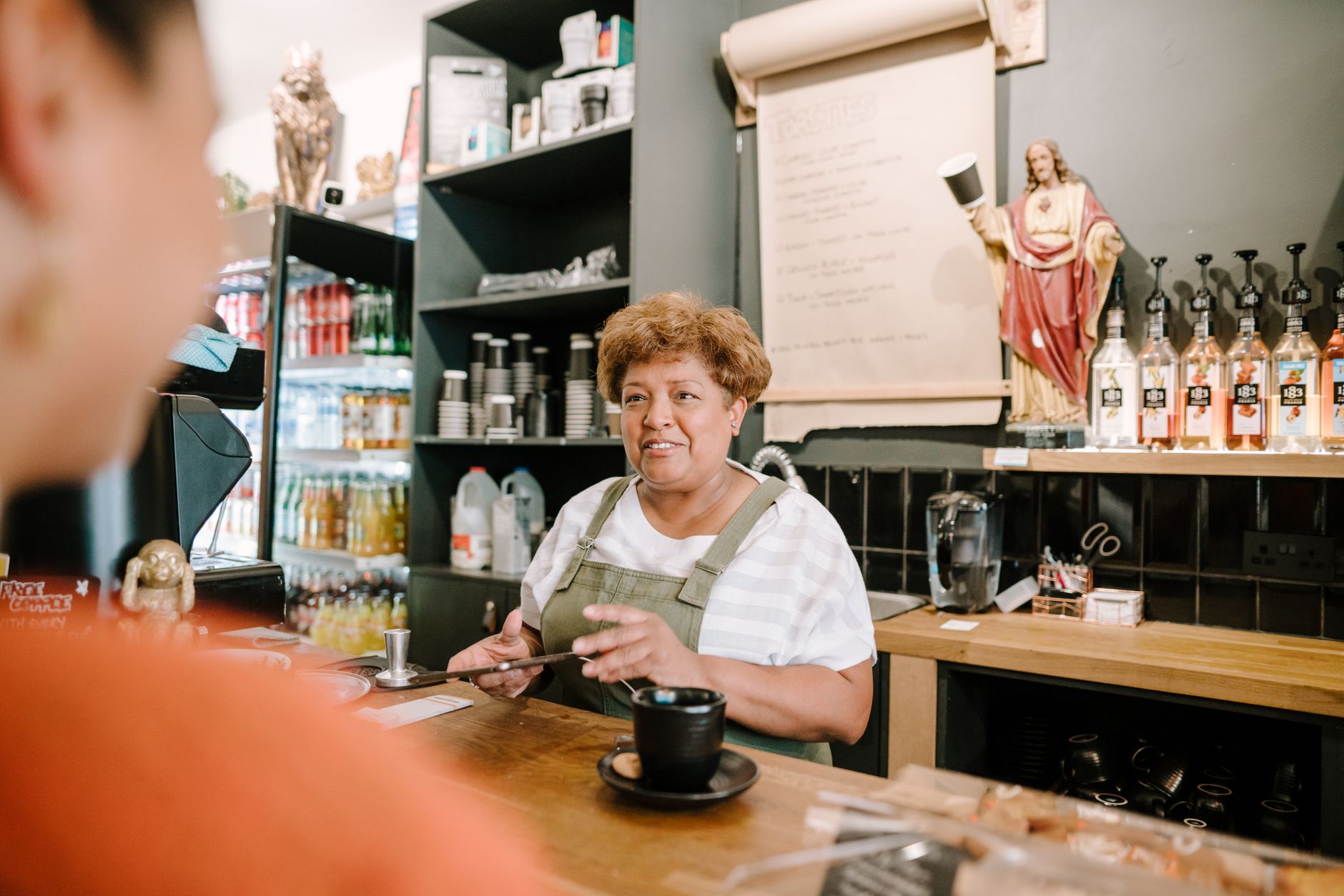
Marcus had been running his coffee shop for six years. He knew the regulars by name, remembered their orders, asked about their kids. The verbal feedback was consistently warm. When he started putting cards on the tables asking people to rate their experience, those came back positive too. Fours and fives, sometimes a nice note.
Then business started to soften. Nothing dramatic at first. A few familiar faces appeared less often. The Tuesday lunch crowd thinned. He couldn't connect it to anything specific he'd changed.
On a slow afternoon, a friend who'd visited twice recently mentioned, gently, that the coffee had been inconsistent. Not terrible, just not what it used to be. Marcus was surprised. Nobody had mentioned it.
The reason nobody mentioned it was sitting right across the counter: Marcus himself.
When people give feedback face to face, or fill in a card that a staff member just handed them, they're giving it under observation. They know you'll see it. They know you're watching. And almost universally, people soften critical feedback under those conditions. They round up scores. They skip the negative observations. They mention what they liked because mentioning what they didn't seems unkind.
This isn't dishonesty exactly. It's just how people behave when they know their feedback is traceable and the person it might hurt is standing nearby. The tendency is well-documented, if not always by that name: people respond in ways they expect will be viewed favorably, rather than ways that accurately reflect their experience. It's a bias toward approval rather than honesty.
It shows up everywhere in feedback collection. Staff-handed cards. Post-visit surveys that ask the customer to rate a named employee. Feedback requested verbally while the team is within earshot. In all those cases, the collection method is working against you.
The problem compounds when businesses treat consistently positive feedback as validation. When scores are high, there's little incentive to look more closely. The table cards came back positive and Marcus read them as confirmation that things were going well. In a way they were. He was running a place people liked enough to say nice things about. But "nice things said face to face" is a different category of information than "honest assessment given privately."
There's also an asymmetry between what people say out loud and what they write down. Verbal feedback in a service setting skews positive, even when people are genuinely unhappy. Writing something down in a form with a score feels more formal and more considered. A customer who gave you four stars verbally might give you three stars in writing, once they've had a moment to think about what the experience actually was.
Marcus set up a short online form with a QR code on the door. No staff involvement. People could scan it as they left, fill it in at home, or ignore it entirely. The form didn't ask them to rate anyone by name. It asked about the coffee, the space, whether there was anything they wished were different.
The first batch of responses was more mixed than anything he'd seen on the table cards. Not bad overall, but specific in a way the cards had never been. The coffee came up several times. One person mentioned the music volume. Another noted that the seating near the window had become cramped after he'd added two extra tables.
None of this was devastating. But it was real information about real problems. The table cards had been producing a 4.8. The anonymous form was giving him something closer to what customers were actually experiencing.
What changed wasn't the coffee shop. The coffee had been inconsistent for months. What changed was that Marcus could finally see it.
The practical implication is fairly simple, even if it takes some getting used to. Feedback collected anonymously, away from the premises, will tell you things that feedback collected in person almost never will. That's not because customers are more critical when they're anonymous. It's that they're less concerned with managing your feelings.
Timing is part of it too. Asking while someone is still in the room, or still in conversation with a member of staff, adds pressure that distorts the response. Asking a few hours later removes some of it. The experience has settled. They're more likely to describe it accurately, and to mention the small things that didn't go wrong but also weren't quite right.
This is why Qria sends forms after the visit rather than during it. The feedback goes out once the customer is no longer in the building, which means they're not writing it with you watching over their shoulder.
A few things are worth expecting if you make this shift. Anonymous collection produces more honest scores on average, but also more extreme ones in both directions. You hear from people who had a genuinely good experience and wanted to say so, and from people who had a bad one and felt safe expressing it. The middle ground, the customers who were fine but had small observations, becomes more accessible too when there's no social pressure to round up.
Going from a 4.7 average on in-person cards to a 4.2 on an anonymous form doesn't mean the business got worse. It means you have a number that reflects something real.
Marcus updated his ordering process for the coffee. He turned the music down on weekdays. He rearranged the seating near the window. The anonymous form kept running, and he kept reading it.
The regulars started coming back. Not all of them. Some were just gone, for the usual reasons: jobs changed, neighbourhoods changed, loyalties shifted somewhere else. But some came back and found a slightly different place than the one they'd quietly given up on.