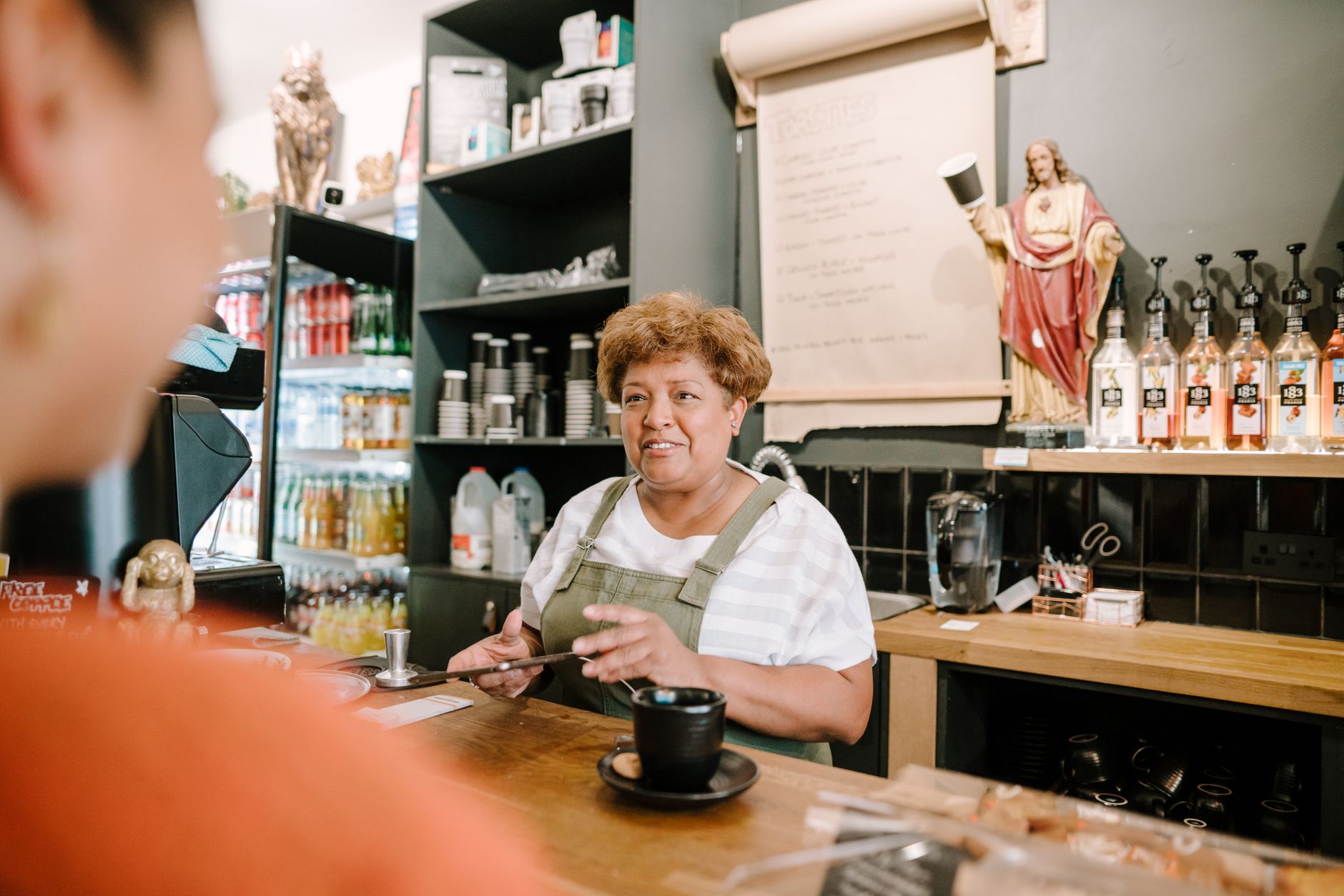
A bakery has maybe forty seconds with each customer, and most of it is spent bagging a sourdough.
That's the whole challenge in one sentence. The transaction is fast, there's a queue behind, there's no table to leave a card on, and you almost never get an email. Someone points at a croissant, pays, and leaves. If the coffee was bitter or the loaf they wanted sold out at half eight, you'll rarely hear about it. They just buy their bread somewhere else next Saturday, and your morning takings drift down by an amount too small to notice for a while.
Restaurants have it easier here. There's a bill, a table, time to linger, a natural moment to hand something over. A bakery is closer to a very fast retail counter, and the feedback method has to respect that. Nobody is going to stand at the till filling in a survey with a queue forming behind them.
The counter is the wrong place to ask, and the right place to invite
Asking someone to give feedback while they're at the counter doesn't work. They're paying, they're in a hurry, the person behind them is eyeing the last pain au chocolat. What does work is planting the invitation there and letting them answer later, on their own time, wherever they end up eating the thing they just bought.
A QR code on the counter, on the bag, or printed on the receipt does exactly that. They scan it now or they scan it at their desk twenty minutes later when they're actually eating the pastry and have an opinion about it. That gap is useful. Feedback about a croissant is a lot more honest once someone has taken a bite, not while they're still deciding whether to add a coffee.
For a bakery with daily regulars, the same code works over and over without you having to do anything. The person who comes in every morning for a loaf will eventually scan it on a day when something was different, better or worse, and that's the response you actually want.
What's worth asking
Keep it short enough that someone can finish it before their bus arrives. A bakery form should lean on the things that are specific to walking in and buying baked goods.
Ask whether what they wanted was in stock. Running out is the quiet killer for bakeries. A customer who came in specifically for a particular loaf and found the shelf empty had a bad visit even though nothing went wrong with your product. If a chunk of responses mention items being gone by mid-morning, that's a baking-quantity decision you can actually make, not a vague sense that Saturdays feel busy.
Ask about freshness and quality plainly. "How was what you bought today?" with a rating covers it. You're baking every day, and a batch that came out slightly under or a bake that sat too long is the kind of thing customers notice and staff, tasting the same things constantly, sometimes stop noticing.
Ask about the wait if you get morning queues. There's a real difference between a customer who walked straight up and one who stood in line for twelve minutes before opening. If your 8am rush is bleeding people who don't have time to wait, the fix might be a second person on the till, and you'd want the data before you pay for the extra hours.
Value is worth one question too, especially if you've nudged prices up recently. Artisan bakery prices come as a surprise to some people, and an unexpected number at the till is a reason someone doesn't come back that they'll never say to your face.
Then one open box. "Anything you'd like to see?" gets you the requests: a gluten-free option, longer weekend hours, a return of the thing you stopped making in spring. Those are the messages that shape what you bake next.
Where the code goes
The bag is a strong spot because it travels home with the food, so the code is right there when the person is eating and has a view. A small stand by the till catches the impulse scanners. Printing it on the receipt works if you give receipts. The thing to avoid is burying it on a poster by the door that everyone walks past. Placement decides whether a code gets used, and the full guide to QR code feedback goes into what makes one get scanned rather than ignored.
Reading what comes in
A single response is easy to act on. Someone says the espresso was watery on Tuesday, you check the machine. But the real payoff is the shape across a few weeks.
Stock complaints clustered around one product tell you to bake more of it. Wait-time gripes clustered around opening tell you about staffing. A quiet dip in quality scores that lines up with a new flour supplier or a new starter on the ovens is the sort of thing you'd struggle to spot from behind the counter, where every day blurs into the next.
This is the same underlying job a busy cafe faces, and the approach to cafe and restaurant feedback carries over, just compressed into a much shorter transaction. A tool like Qria pulls the private feedback from your form and the public Google reviews for the shop into one place, then hands you a plain summary of what customers keep saying, so you can read the week in a couple of minutes rather than piecing it together from a pile of individual answers. When a happy regular fills one in, you can prompt them to leave that review publicly while they're still glowing about the morning bun, which is how the good days slowly build the reputation that pulls new customers through the door.
Most people will never fill anything in. That's fine. The handful who do, holding an actual pastry with an actual opinion, will tell you more than a week of watching the queue ever could.