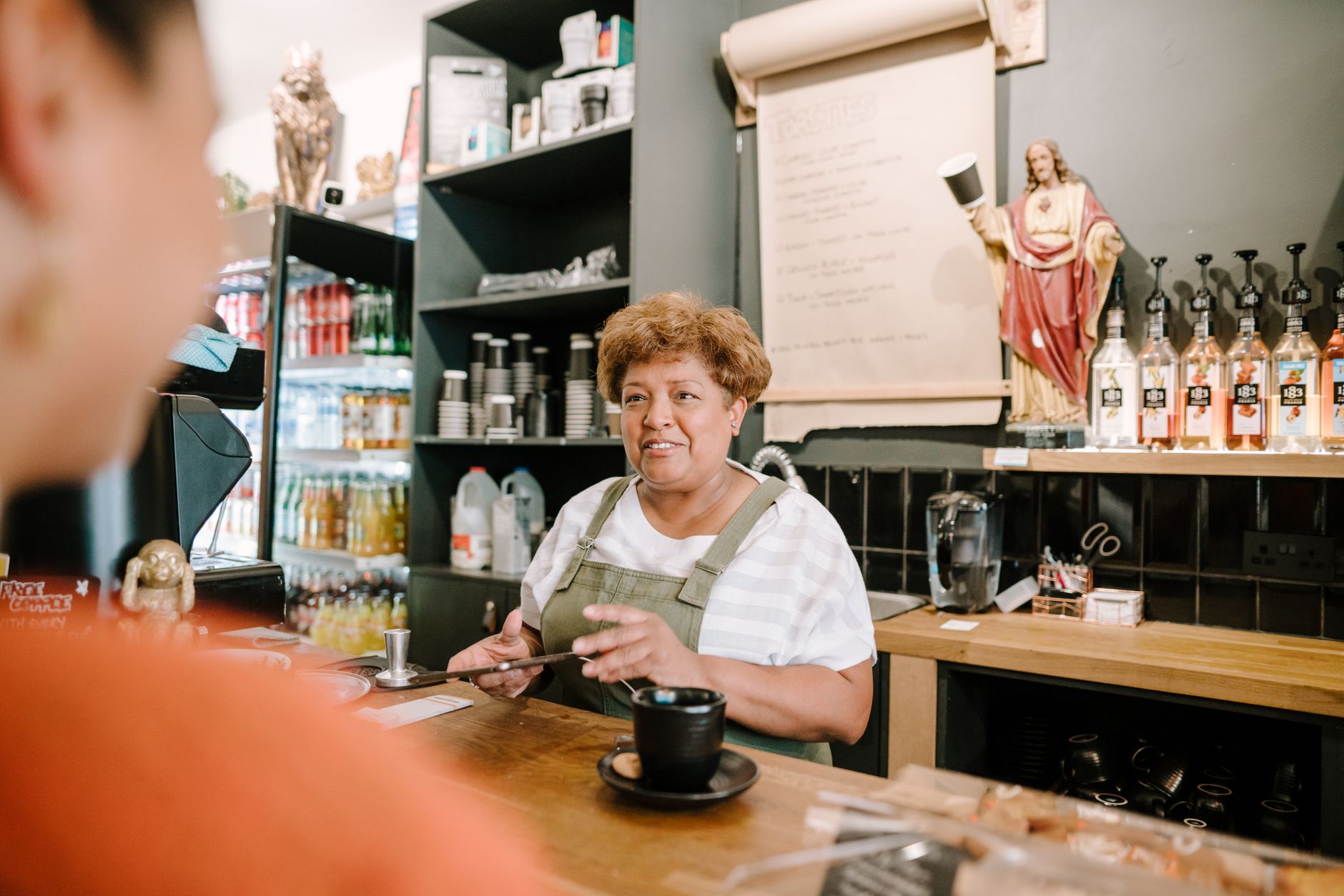
A bookshop is one of the harder places to ask customers how things are going, partly because the visit isn't really transactional. Someone might browse for forty minutes and leave with nothing. Another customer comes in for a specific book, buys it, and is gone in three minutes. A third stops by every Saturday for the cafe at the back and barely glances at the shelves. A fourth turns up only for the author event and never comes back. The same business is delivering four different products to four different customers, and a feedback program has to acknowledge that before it starts.
What follows is a starter framework for independent bookshop owners and managers who want to know what their customers actually think, without setting up a research operation that the four-person team doesn't have time to run.
What's worth knowing
The areas that drive a customer's view of an indie bookshop, roughly in order of how much they matter:
- The staff and their recommendations. A bookshop lives or dies on whether its booksellers can talk well about books. This is what differentiates an indie from an algorithm-driven online store, and customers know it.
- The curation. The selection on the shelves and the front tables. Whether it reflects what readers in the area actually want, or feels like a generic shop's stock list with the front display rotated.
- The browsing experience. Lighting, music, seating, whether the cafe (if there is one) is somewhere you'd want to sit. The smell.
- Stock specifics. Whether they were able to find what they came in for. This is huge and often missed.
- Events. Author readings, book clubs, signings, in-store talks, kids' story time. These bring in customers who wouldn't otherwise visit.
- Online ordering. For shops that do click-and-collect or postal. The website, the speed, the packaging.
You can't ask about all of these without overwhelming the customer. Pick what's actionable this quarter and rotate.
Where to put the QR code
QR codes work well in bookshops because the customer is usually relaxed and unhurried at the point of purchase. Good locations:
- On the receipt, or printed on a small card slipped in with the receipt
- On a bookmark given with every purchase. People keep these and might scan a week later
- At the event signing table, with the prompt specifically about the event rather than the shop generally
- In the order confirmation email for online orders
- On a small sign at the recommendation table
The bad locations are the ones that ask people to stop while they're still browsing. A QR code on the front door that prompts a customer before they've even looked at a book is asking the wrong question at the wrong time. QR code feedback for in-person businesses goes through these placement decisions across different shop types.
Questions worth asking
A short list of prompts that tend to work in a bookshop context.
For walk-in customers at point of sale:
- What brought you in today? (a specific book, browsing, the cafe, an event, the front window display)
- Did you find what you were looking for? (the question that quietly gives you stock-planning signal)
- Anything you wanted but couldn't find?
For event attendees:
- How was the event?
- Would you come to another event here?
- Who would be worth booking next? (signal for future programming)
For online order customers:
- Did the book arrive in the condition you expected?
- How was the website search?
- Anything you wanted that we didn't have?
For staff praise specifically:
- Was there a member of staff who helped you today? Mind telling us their name?
That last one matters more than it looks. Independent booksellers are not paid well, the work is physically demanding, and a customer naming them in feedback is one of the small things that makes the job feel worth doing. Make sure the team sees those mentions.
What not to do
A few things worth avoiding:
- Long surveys. Browsing a bookshop is leisure, and a six-question form after a five-pound paperback is asking too much.
- Asking right after the customer has paid and is trying to leave. Catch them at the bookmark or receipt level, not at the till.
- Star ratings on the shop as a whole. They tend to give you a 4 or a 5, and you learn nothing about what to actually change.
- Surveying every single visitor. A sample is fine. The bookshop isn't a research operation, and the point is to spot patterns over the course of a month, not to chase every visitor for a response.
What to do with the responses
A few patterns are worth tracking carefully, even for a small shop.
The "couldn't find" signal is the most directly actionable. Repeated mentions of books or genres you don't stock are a useful nudge for the buyer. A pattern of three or four mentions over a couple of weeks is often enough to change a stock order.
Event feedback matters if you're hosting things. Which authors brought in attendees who came back as buyers? Which event formats led to people signing up for the next one? Author readings, kids' story time and book clubs all work very differently for different shops, and tracking which ones produce repeat visits is how you avoid pouring effort into the wrong format.
Staff praise is the underrated one. Names that come up often are doing something the rest of the team can learn from. Names that never come up might just be on the wrong shifts, or might benefit from some coaching on customer-facing work. The data is suggestive rather than conclusive, and worth reading carefully.
For a single shop, an owner reading every response is reasonable. For a small group of shops, or once volumes pick up, that becomes harder to keep up with. Qria is built for the case where the analysis matters and you don't have a research team to do it manually. A structured feedback program in a bookshop is mainly about giving the staff a clearer read on what's working than the regular conversations with regular customers can give them on their own.
The posts on how often should you ask for feedback and what 300 feedback responses actually look like are useful background for thinking about cadence and scale.