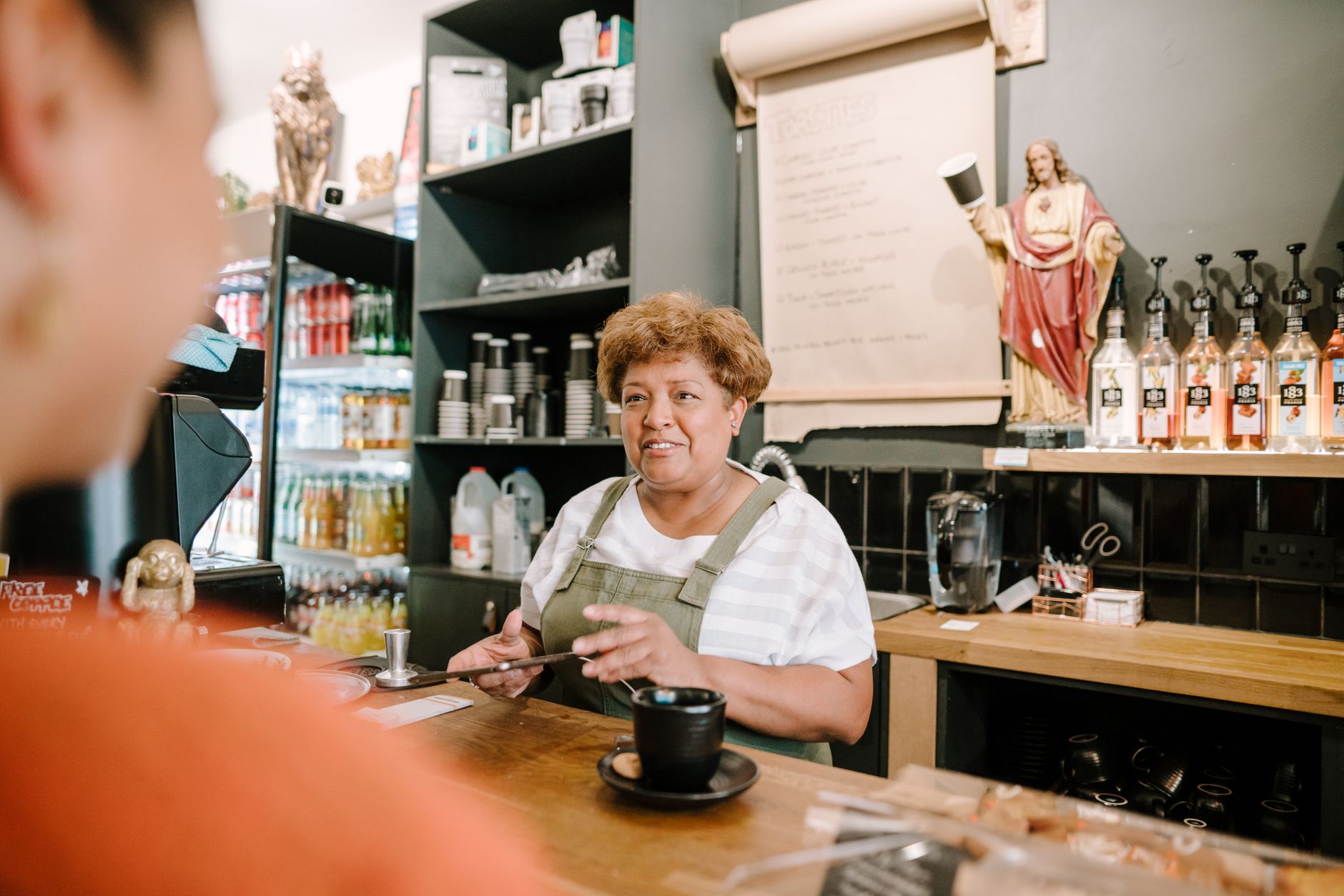
A florist I used to walk past most mornings had a feedback system that consisted of asking, "how was it?" when a regular came back through the door. That worked for her because she remembered everyone's last order and could read a face. It stopped working when she opened a second shop and the staff there had no idea who'd bought what.
Florists are an odd case. Most of what you sell ends up in someone else's hands, on someone else's table, for someone else's occasion. The person paying is rarely the person enjoying the arrangement. The moments that matter most are also the most emotionally loaded ones: a wedding, a funeral, an apology bouquet, a hospital visit. None of that fits neatly into a five-star tap on a tablet.
If you want to know whether your shop is doing what your customers actually need it to do, you have to ask in a way that fits the context.
Match the question to the occasion
Flowers aren't a uniform purchase. Someone collecting a Saturday bunch on a whim cares about different things than someone ordering church flowers for a parent's service. You can use the same feedback link for both, but you shouldn't be asking the same questions.
A reasonable split:
- Walk-in counter sales. Was the arrangement what they expected? Did the staff suggest something useful? Was the pricing clear?
- Event work (weddings, parties, corporate). Did planning conversations make them feel looked after? Did the flowers match the brief? Did delivery and setup happen as agreed?
- Funeral and sympathy. Was the staff sensitive? Was the timing right? Did the arrangement reflect what the family asked for?
- Subscriptions and recurring delivery. Did the flowers arrive in good condition? How long did they last? Was the variety satisfying or repetitive?
You don't need a separate form for each one. You need a tag on the response that captures which kind of order it relates to, so the answers can be read in context later.
The right moment to ask
Walk-ins should be asked at the till. A short QR code on the receipt or printed on the wrap gets the highest response rate when the bouquet is still in the customer's hand. The QR code feedback guide covers the placement decisions that make a code get scanned versus ignored.
For events, wait a week. Asking a bride for feedback the morning after her wedding is not a winning strategy. A short follow-up message seven days later, after the photos have circulated and the dust has settled, gets you considered answers rather than dazed ones.
For subscriptions, ask after the second or third delivery, not the first. The first delivery is the honeymoon period. People who hate it have cancelled before you can ask, and people who love it are still in the new toy phase. By the second or third arrival, they have a real opinion that's worth hearing.
For sympathy work, I'd skip the follow-up unless there's a longstanding relationship with the family. The cost of getting that timing wrong is much greater than whatever you might learn.
What to actually ask
Most florists who set up a form ask too many things, or ask the wrong things. A handful of questions, tuned to what you can actually change, will get you further than a long checklist will.
For post-event feedback, three open-text questions are a good starting point:
- What was the most important thing we got right?
- What was the one thing you'd change?
- Would you book us again? If not, what would have to be different?
For walk-ins, swap the second question for "anything we could have done better at the counter?" because that's the part of the experience you actually control.
The reason for keeping these open rather than multiple choice is that the texture of an answer matters. "Staff was nice" and "Maria remembered our anniversary order from last year" are both positive responses, but only one of them tells you anything about why people come back. If you're trying to make sense of more than a handful of replies, a tool like Qria groups them into themes so you can see what's recurring without reading every response cold.
Photos and the recipient experience
This part is specific to florists and a lot of shops miss it. People who are happy with their flowers, especially for events, often take photos. If you make it easy for them to send those back to you with a short comment, you get two things: visual evidence of how your work looks in context, and a richer source of feedback than any text box can produce on its own.
A form with an optional photo upload, linked at the bottom of your delivery email or sent a few days after an event, gets a surprisingly high response rate. Many people want to share the photos anyway. You're giving them a place to do it.
There's a second piece here that's easy to forget. The buyer isn't always the recipient. For gifts, the person paying chose you, but the person who actually saw and lived with the arrangement was someone else. If your delivery includes a small card with a thank-you and a feedback link, you'll start hearing from the recipients too, and their feedback is often the most useful, because they're the ones whose experience your reputation rests on.
Closing the loop
Whatever you collect, the worst thing you can do is collect it and then go silent. If a customer tells you their roses wilted in three days and you switch suppliers, tell them you did. A short "thanks for letting us know, we've changed our wholesaler for these" message turns a one-off feedback giver into someone who feels heard, and probably someone who comes back.
When you can't act on something, explain that too. "We hear this, and here's what's stopping us from changing it right now" is more respectful than silence.
Florists live and die by word of mouth more than almost any small business I can think of, and the way you ask for feedback is itself part of the service you're selling. Most shops treat asking and answering as two separate jobs. The ones with the strongest repeat custom treat them as the same one, which is worth thinking about whether you're collecting feedback already or haven't started yet.