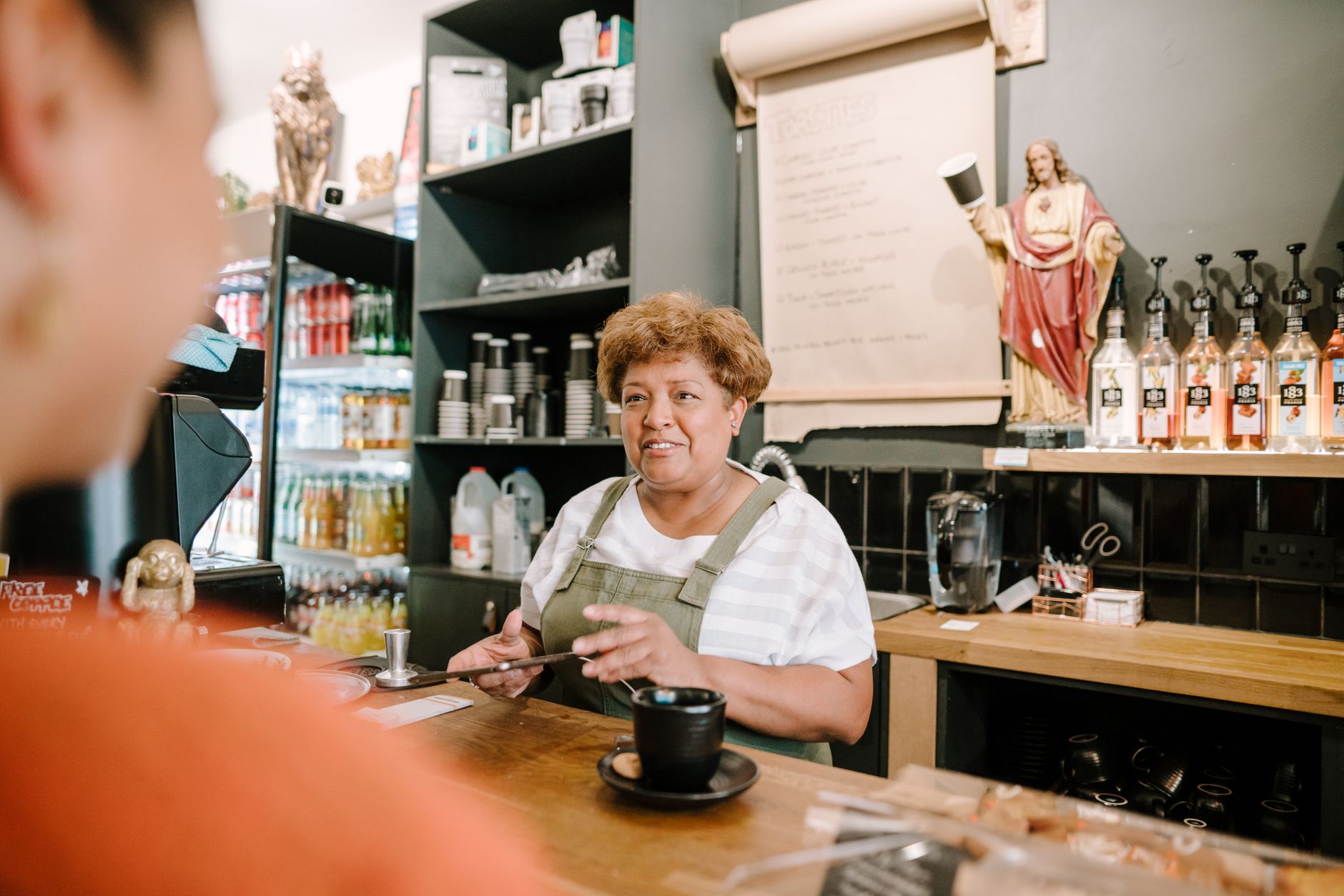
Dara ran a small physiotherapy clinic, three practitioners and a front desk, the kind of place where the receptionist knows most patients by first name. For years she'd collected feedback the sensible way. Every form asked for a name and contact details, because if someone had a problem, she wanted to be able to call them and put it right. That's just good practice. You don't leave an unhappy patient unhappy if you can help it.
The feedback was lovely. Warm, grateful, the occasional gentle suggestion about parking. Her average rating sat somewhere north of anything she could complain about. And for a long while she took that at face value, because why wouldn't you. People were signing their names to it.
The thing that made her doubt it was a patient who left. Someone who'd been coming for months, whose last form had been perfectly positive, name attached, four stars, "very happy with my treatment." Then she stopped booking. When the reminder emails went unanswered, Dara let it go, the way you do. Months later she heard, secondhand, that the patient had felt one of the practitioners rushed her appointments and hadn't really listened. None of that was on the form. The form had her name on it, and the woman had to sit across from that practitioner every week, and so the form said "very happy."
That's the trade Dara hadn't understood she was making. When you ask people to sign their feedback, you get feedback people are comfortable having attached to them. Which, in a small clinic where the customer is going to see your face again next Tuesday, means you get the polite version. The name on the form isn't just a contact detail. It's a filter, and it filters out precisely the things you most need to hear.
So she tried the other thing. New forms, no name field, nothing that tied a response back to a person. Just the questions and a blank space, filled in on a phone after the appointment rather than handed over the desk.
The answers changed almost immediately. Not into a wall of complaints, the clinic was genuinely good, but into something with texture. The rushed appointments showed up, more than once, which told her it hadn't been one bad day. Somebody mentioned that the waiting room chairs were hard on exactly the sort of backs the clinic existed to treat, which was so obvious in hindsight it stung. The scores drifted down half a point and got a lot more honest. This is the well-worn pattern that shows up whenever you take your own face out of the room, and it's the same reason feedback given to a person's face tends to score higher than the truth.
And then a response came in that stopped her cold. Anonymous, obviously distressed, describing an interaction that had genuinely upset the patient. Something Dara needed to address, and wanted to address, urgently. Except there was no name. No email. No way to reach back and say I'm so sorry, tell me what happened, let me make this right. The honesty she'd unlocked came with a wall around it. She could see the problem and she couldn't reach the person.
That's the whole trade in one moment. Anonymity buys you honesty and charges you the ability to follow up, and those two things pull in opposite directions. Named feedback lets you close the loop with an individual and quietly discourages them from telling you the loop needed closing. Anonymous feedback tells you the truth and then refuses to let you do anything about it for that specific person. There's no setting that gives you both at full strength, and anyone who tells you otherwise is selling something.
What you can do is stop treating it as one decision for all of your feedback. The right level of anonymity depends on what you're trying to learn, and it's worth choosing deliberately rather than defaulting to whatever the form template came with.
When you want honest measurement, the real temperature of the place, go anonymous. Satisfaction, recurring friction, the stuff people soften when their name's attached. You're reading these in aggregate anyway, looking for the pattern rather than the individual, so losing the ability to reply to any single response costs you little. The patterns are the point, and patterns don't need names.
When following up is the entire reason you're asking, ask for the name. A serious complaint you've committed to resolving, a service recovery after something went wrong, a customer who's cancelling and might stay if you reached out. Here the contact detail is worth more than the marginal honesty you give up, because a slightly polite complaint you can actually respond to beats a brutally honest one you can only file.
The version Dara settled on, and the one I'd point most small businesses toward, is to keep the feedback itself anonymous and make identifying yourself optional. The form asks its questions without a name field, and at the end offers a line like "leave your email if you'd like us to follow up, otherwise skip it." Most people skip it, and you get your honest read. The ones with something they actually want resolved leave a way to reach them, because now the name serves them rather than exposing them. It's the same collection method doing two jobs, sorted by what the customer wants out of it. If you're weighing this alongside the rest of your setup, the broader guide to collecting customer feedback covers where it sits.
This is roughly how Qria's forms are built, feedback that isn't tied to a person by default, with room for someone to raise their hand if they want a reply, and the whole batch summarised so the anonymous majority still adds up to something you can read in a couple of minutes. The optional-contact line also feeds the part where a happy respondent can be pointed toward leaving a public review, while the difficult responses stay private for you to work through. The loop closes itself where the customer wants it closed, and stays open where they'd rather stay quiet.
Dara never did find out who left that distressing response. She addressed the underlying issue anyway, changed how appointments were scheduled so nobody felt rushed, and put a note on the form thanking whoever it was and explaining what had changed. It wasn't the personal apology she'd wanted to give. But the next month's responses were a little warmer, and one of them, anonymous, said the appointments felt less hurried lately. She decided to take the win.